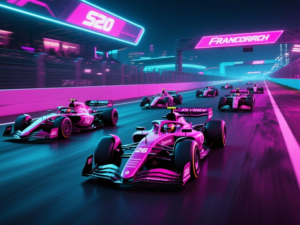
Formula 1 returned to the Spa-Francorchamps circuit for the Belgium Grand Prix, a venue renowned for its rich history in motorsport. However, the performance of the current 2026 F1 cars raised concerns about their suitability for such a demanding track.
The 2026 F1 power units incorporate hybrid technology, but they have been criticized for their limited energy output. During the race, it was evident that the battery could only power the electric motor for a few seconds each lap. Consequently, drivers experienced a significant drop in power, often less than that of Formula 2 cars, for the majority of the lap.
Historic Significance of Spa
Spa-Francorchamps is often regarded as one of the greatest racetracks globally. The circuit has been part of the F1 calendar since the inaugural season in 1950, with its first race dating back to 1922. Originally a 9-mile loop of public roads, the track has undergone several changes, now measuring 4.3 miles (6.9 km) and retaining its status as the longest in F1.
The layout features iconic corners like Eau Rouge and Raidillon, which present unique challenges for drivers. However, the current generation of F1 cars has struggled with high-speed corners, as the hybrid power units do not provide sufficient energy for sustained high-speed racing.
Driver Experiences and Challenges
Drivers have expressed dissatisfaction with the performance of the cars at Spa. Max Verstappen noted that during much of the second sector, the cars operate with only about 450 to 500 brake horsepower, akin to that of a Formula 3 car, despite the downforce levels typical of F1. This lack of power has diminished the excitement of driving at such a prestigious venue.
Additionally, the integration of AI systems for energy management has introduced further complications. These systems are designed to optimize energy deployment, but their opacity can leave drivers feeling powerless when the car does not respond as expected. George Russell highlighted issues with his car’s performance, attributing it to the AI’s management of energy rather than the power unit itself.
Race Outcomes and Future Implications
The race concluded with Kimi Antonelli taking the win, while Verstappen and Russell faced challenges throughout. The overall performance of the 2026 cars at Spa has raised questions about their effectiveness on traditional racetracks, suggesting that the current regulations may need reevaluation to enhance the racing experience.
This article was produced by NeonPulse.today using human and AI-assisted editorial processes, based on publicly available information. Content may be edited for clarity and style.