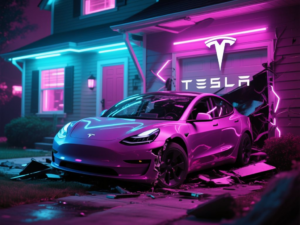
An elderly woman in Texas tragically lost her life when a Tesla Model 3, driven by Michael Butler, crashed into her home. Butler informed police that he was utilizing the vehicle’s automated driver-assistance system at the time of the incident. The Harris County Sheriff’s Office confirmed that Butler was not under the influence and is cooperating with the investigation, which seeks to determine the role of Tesla’s Autopilot feature in the crash.
Details of the Incident
According to the sheriff’s office, Butler failed to maintain his lane, veering off the road and striking the residence at a high rate of speed. While the exact speed of the vehicle remains unspecified, a doorbell camera video captured the moment of impact, showing the Tesla crashing through the front of the brick home. Martha Avila, the 76-year-old victim, was inside the house at the time, and her family has expressed their devastation over her sudden death.
Family’s Response and Ongoing Investigation
Martha Avila’s daughter, Jennifer Barbour, reported that no other family members were injured and described her mother as being in good health prior to the incident. The family is currently living in a hotel while they await answers regarding the crash. Barbour expressed uncertainty about whether the fault lies with the driver or the vehicle itself, stating, “I don’t know if it’s his fault or the car’s fault or what really happened.” Tesla has not provided a comment following the incident.
Regulatory Implications
The National Highway Traffic Safety Administration (NHTSA) is launching a special investigation into the crash. This incident comes at a time when Tesla’s Autopilot feature has faced scrutiny regarding its safety and reliability. Critics argue that Tesla’s marketing may mislead consumers about the capabilities of the Autopilot system, which the owner’s manual advises should not be fully relied upon without driver supervision.
Broader Context of Automated Driving Technologies
As Tesla continues to advocate for the advancement of automated driving technologies, the regulatory landscape is evolving. The NHTSA has previously indicated a willingness to relax certain regulations that could facilitate the deployment of autonomous vehicles. However, safety advocates have raised concerns about the implications of such changes, emphasizing the need for thorough research and caution in the face of rising motor vehicle fatalities.
This article was produced by NeonPulse.today using human and AI-assisted editorial processes, based on publicly available information. Content may be edited for clarity and style.