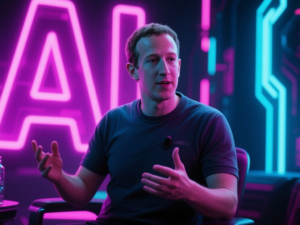
In a recent public post titled “The Future is for Everyone,” Meta CEO Mark Zuckerberg expressed optimism about the potential of AI, suggesting that we live in a transformative era. However, his assertions have drawn skepticism, particularly regarding who truly benefits from advancements in technology.
Questionable Credibility
Zuckerberg’s credibility as a futurist is under scrutiny, especially given his past proclamations. In 2019, he claimed, “The Future is Private,” while overseeing a company that has faced criticism for privacy violations. His latest post aims to outline a philosophy for utilizing superintelligence to enhance lives and communities. Yet, critics argue that his vague language fails to address pressing societal issues.
Access and Centralization Concerns
Central to Zuckerberg’s argument is the question of who will have access to superintelligence. He posits that the future of AI could either be centralized within a few institutions or democratized for broader use. However, critics highlight that this discussion lacks depth, as it overlooks critical global issues such as wealth distribution, access to basic needs, and the preservation of human rights.
Meta’s Profit Motive
While Zuckerberg emphasizes the importance of making AI accessible, he also hints at a profit-driven model for Meta. He states that the company will provide free or affordable access to AI tools but will also implement a dynamic auction mechanism for those seeking enhanced computing power. This raises concerns about the true accessibility of these tools, as the financial implications may favor larger entities over individual users.
Contradictions in Vision
Zuckerberg’s vision of a future where everyone can create and innovate is met with skepticism, particularly in light of the competitive landscape that makes sustaining a business increasingly difficult. His assertion that AI will empower creators and entrepreneurs fails to acknowledge the challenges posed by market saturation and the commodification of content creation.
Ultimately, while Zuckerberg advocates for a future where AI benefits all, the reality appears more complex. The distribution of power and resources in the tech industry remains heavily skewed towards billionaires and large corporations, raising questions about the genuine inclusivity of his vision.
This article was produced by NeonPulse.today using human and AI-assisted editorial processes, based on publicly available information. Content may be edited for clarity and style.
Original source: theregister.com