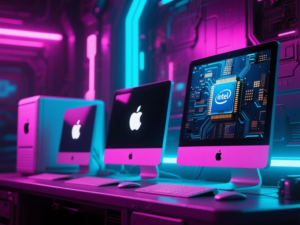
The impending release of macOS 27 marks a pivotal moment in the history of Intel Macs, as it signals the end of an era. While the last Intel models will receive security and Safari updates for two more years, the transition to Apple Silicon has effectively concluded the Intel chapter for Macs.
The collaboration between Apple and Intel began in the early 2000s, driven by the need for improved performance and efficiency. Initially, Apple utilized PowerPC processors, co-developed with IBM and Motorola. However, issues with the PowerPC architecture, particularly concerning heat and power consumption, prompted Apple to explore alternatives.
Origins of the Intel Transition
The project, codenamed “Marklar,” started as a side initiative by Apple engineer JK Scheinberg in 2000, aiming to create a version of Mac OS X compatible with Intel processors. By 2005, Apple’s frustrations with PowerPC chips led to a public demonstration of Mac OS X running on Intel hardware, confirming years of behind-the-scenes development.
The Developer Transition Kit (DTK) was introduced to assist developers in adapting their applications for Intel Macs. This kit, essentially a Pentium 4-based system housed in a Power Mac G5 case, was available for a fee to developers and required return after a year.
Successful Transition and Innovations
Apple officially began shipping Intel Macs in January 2006, starting with the iMac and a renamed MacBook Pro. The transition was facilitated by a compatibility layer called Rosetta, which allowed PowerPC applications to run on Intel systems while developers worked on native versions.
Throughout the Intel era, Apple introduced several innovations, including the MacBook Air, which leveraged Intel’s smaller Core 2 Duo processors to create a remarkably thin laptop. This design set a new standard for portable computers.
Challenges and the Shift to Apple Silicon
However, by the mid-2010s, Intel faced significant challenges, including delays in its manufacturing processes and issues with the Skylake architecture. Apple began developing its own processors, leading to the eventual transition to Apple Silicon in 2020.
As Apple moves forward, the legacy of Intel Macs remains significant, showcasing a period of rapid technological advancement and the eventual shift towards a more integrated and efficient architecture.
This article was produced by NeonPulse.today using human and AI-assisted editorial processes, based on publicly available information. Content may be edited for clarity and style.
Original source: arstechnica.com