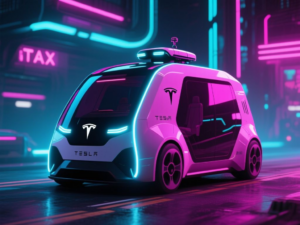
Recent data from the National Highway Traffic Safety Administration (NHTSA) has shed light on the operational difficulties faced by Tesla’s robotaxi service. The data reveals that at least two crashes involving Tesla robotaxis occurred while the vehicles were being remotely operated by teleoperators.
These incidents took place in Austin, Texas, where Tesla began offering robotaxi rides in June 2025. Notably, both crashes happened while a safety monitor was present in the vehicle, and no passengers were onboard. In one incident from July 2025, a remote operator took control of the vehicle after a safety monitor requested assistance. The operator increased the speed of the robotaxi, which subsequently drove up a curb and collided with a metal fence. A second crash occurred in January 2026, where a remote operator made contact with a temporary construction barricade while traveling at approximately 9 MPH.
Tesla disclosed to lawmakers in March 2025 that it permits remote operators to drive its robotaxis. This approach differs from other autonomous driving services, which typically involve remote workers monitoring the vehicle’s software rather than directly controlling the vehicle.
In addition to the teleoperator-related crashes, TechCrunch reported two other incidents where Tesla robotaxis clipped mirrors on parked vehicles. In another case, a robotaxi failed to avoid a dog that ran into the street, although the animal survived the encounter.
Further complicating matters, a recent report from Reuters highlighted that the robotaxi service is also grappling with long wait times. A journalist attempting to use the service in Dallas experienced nearly two hours of waiting for a ride that typically takes about 20 minutes. Additionally, there were multiple reports of robotaxis dropping off passengers significantly away from their intended destinations, despite being within Tesla’s operational coverage area.
While Tesla is not alone in facing challenges related to crashes and software issues—similar problems have been reported by Waymo—the ongoing difficulties suggest that Tesla may have considerable work ahead to reach operational efficiency comparable to its competitors.
This article was produced by NeonPulse.today using human and AI-assisted editorial processes, based on publicly available information. Content may be edited for clarity and style.
Original source: engadget.com