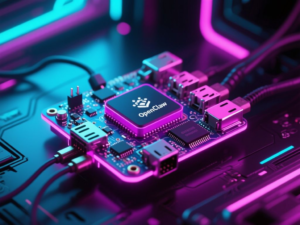
The beloved British micro-computer manufacturer, Raspberry Pi, has recently experienced a significant surge in its stock price, climbing 90 percent within just a few days. Although the price has stabilized, it remains over 30 percent higher for the week. This remarkable rally appears to have been triggered by a post from an X user, “aleabitoreddit,” who connected the demand for Raspberry Pis to the AI agent known as OpenClaw.
OpenClaw, previously referred to as Clawdbot and Moltbot, has captured the attention of AI enthusiasts due to its capabilities in performing everyday tasks such as sending emails, managing calendars, and booking appointments. However, it has also sparked concerns regarding security vulnerabilities. Experts have cautioned against running OpenClaw on personal devices, highlighting the risk of leaking sensitive information online. Some security professionals have gone so far as to label it “an infostealer malware disguised as an AI personal assistant.”
Raspberry Pi’s Role
In light of these security concerns, utilizing a low-power device like the Raspberry Pi could offer a more secure approach to interacting with OpenClaw. Raspberry Pi has built its reputation on delivering sufficient computing power in a compact, cost-effective package. However, the price of Raspberry Pis has increased significantly, with the top-spec Raspberry Pi 5 now retailing for over $200, up from $120 a year ago, largely due to a global memory shortage.
Technical Limitations
The Raspberry Pi 5 features a Broadcom BCM2712 chip, manufactured using a 16 nm process technology, which is considered outdated. While OpenClaw can run on lower-end Raspberry Pis through forks like PicoClaw, it still requires access to an API service for large language model (LLM) functionalities. Running LLMs locally on a Raspberry Pi is not feasible, and even high-end devices like a maxed-out Mac Mini struggle with the demands.
Alternative Solutions
For those seeking a more secure and efficient solution, utilizing a virtual private cloud (VPC) to run OpenClaw is recommended. VPC instances can be rented affordably and can be shut down easily if the AI does not meet expectations. This approach allows users to maintain control and security without the risks associated with running OpenClaw on local hardware.
As Raspberry Pi’s stock price continues to fluctuate, the implications of this AI-driven demand remain to be seen. For now, those who prefer to keep their AI tools close may find a Raspberry Pi useful for other hobbyist projects, steering clear of the potential pitfalls of OpenClaw.
This article was produced by NeonPulse.today using human and AI-assisted editorial processes, based on publicly available information. Content may be edited for clarity and style.
Original source: theregister.com