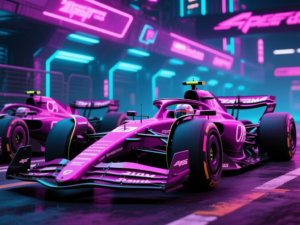
With just two weeks until the Formula 1 season kicks off in Australia, teams are currently in Bahrain for their third and final preseason test. The upcoming 2026 season is poised to be markedly different, featuring all-new cars, engines, hybrid systems, and a shift towards sustainable fuels.
While preseason testing times can be misleading—teams often test components outside of in-season regulations—this year’s tests are particularly noteworthy. The sport is transitioning from 12 years of the same hybrid power units to a completely new design. The internal combustion engine remains a turbocharged 1.6 L V6, but the previous MGU-H hybrid system, which captured waste energy and mitigated turbo lag, has been removed. The remaining hybrid system, the MGU-K, is now more powerful and is paired with a 4 Mj (1.1 kWh) battery pack.
This new setup allows for energy harvesting from both braking and the engine. The V6 engine produces 400 kW (536 hp), while the MGU-K can add 350 kW when charged. Each car can deploy up to 8.5 mJ (2.4 kWh) of electrical energy per lap, making energy management crucial for drivers.
During testing, drivers have experimented with techniques such as downshifting to maintain engine revs for battery charging. A strategy known as “superclipping” allows cars to slow down while increasing engine revs to charge the battery for better acceleration out of corners. However, this strategy can lead to inconsistencies in lap times due to varying battery states and track conditions.
Notably, the MGU-K will not be active during race starts, engaging only above 50 km/h (31 mph) to prevent disparities in acceleration among drivers. Ferrari has opted for smaller turbochargers for quicker response times, contrasting with other teams that have chosen larger turbos for higher peak power.
The 2026 cars also exhibit a new design, being shorter and narrower than their predecessors, with varied aesthetics across teams. Each car features active front and rear wings that adjust for downforce and drag, a significant change from previous regulations that limited design flexibility.
Technical discussions continue regarding engine compression ratios, with Mercedes reportedly utilizing advanced materials to create engines that increase compression as they heat up. Currently, engines are limited to a 16:1 compression ratio measured at ambient temperature, but a potential hot test is under consideration.
Moreover, five teams face challenges with their sustainable fuels, as their suppliers have not completed the necessary homologation process by the approaching deadline. If unresolved, these teams will have to use substitute fuels not optimized for their engines.
Reliability issues may also emerge early in the season, as teams have encountered numerous technical problems during testing. Aston Martin, in particular, has struggled significantly.
As the season approaches, F1 coverage will transition to Apple TV in the U.S., offering users access to the F1TV app alongside Apple’s platform, though details on commentary feeds remain pending.
This article was produced by NeonPulse.today using human and AI-assisted editorial processes, based on publicly available information. Content may be edited for clarity and style.
Original source: arstechnica.com