The quest for life beyond Earth has taken a significant turn with the discovery of ammonia-bearing compounds on Europa, one of Jupiter’s moons. Beneath its icy crust lies a vast, salty ocean, heated by tidal flexing, which may create conditions suitable for life.
Discovery of Ammonia Compounds
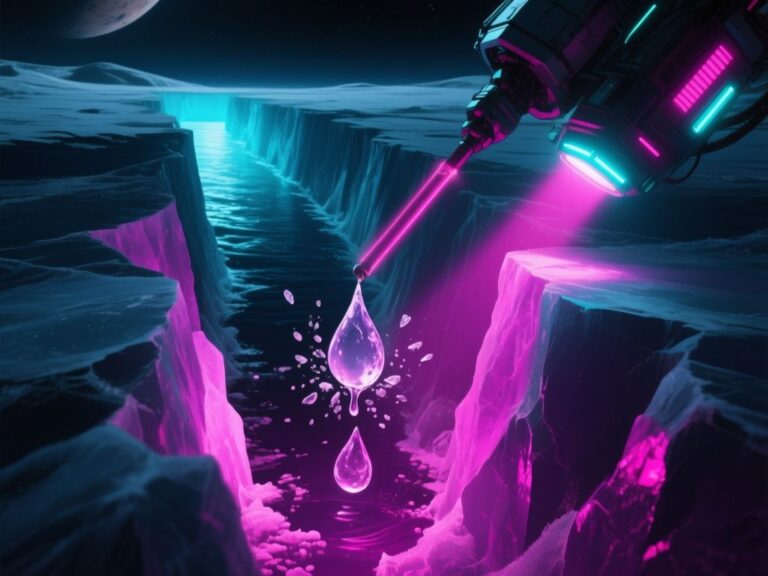
Data from the Galileo spacecraft, which orbited Jupiter from 1995 to 2003, has provided crucial insights into Europa’s surface composition. NASA/JPL scientist Al Emran reanalyzed measurements from the Near-Infrared Mapping Spectrometer and identified faint ammonia absorption bands at 2.2 microns near surface cracks. These cracks serve as conduits for liquid water to rise from the moon’s interior, suggesting that ammonia was transported to the surface through a process known as cryovolcanism.
Geological and Astrobiological Implications
The presence of ammonia is significant because it indicates that the detected compounds were likely deposited relatively recently in geological terms, as ammonia cannot survive long in space. This discovery suggests that the ocean beneath Europa’s icy surface has undergone chemical changes due to the influx of ammonia, which is a crucial element for life on Earth.
Ammonia, with the chemical formula NH3, is essential for the formation of amino acids, DNA, and proteins. While the presence of ammonia does not confirm life, it does suggest a potentially hospitable environment and hints at ongoing geological activity.
Future Exploration with Europa Clipper
Ammonia’s detection on Europa aligns with the upcoming Europa Clipper mission, set to launch on October 14, 2024, and arrive in the Jupiter system by 2030. This mission aims to investigate whether Europa possesses habitable conditions beneath its frozen exterior. The Clipper will conduct detailed chemical analyses of the ocean and measure the thickness of the surface, providing vital information about the moon’s geological features.
As observations from the James Webb Space Telescope (JWST) indicate ongoing cryovolcanism, the Clipper mission will build on these findings to enhance our understanding of Europa’s potential for supporting life.
This article was produced by NeonPulse.today using human and AI-assisted editorial processes, based on publicly available information. Content may be edited for clarity and style.
Original source: universetoday.com