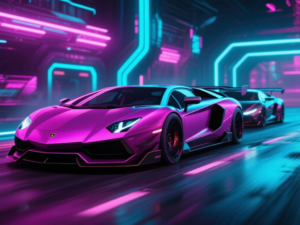
For over a century, the automotive industry has prioritized speed and power in the development of sports cars. Engineers continuously strive to enhance performance by increasing engine output, reducing vehicle weight, and employing advanced technologies. However, as cars reach unprecedented performance levels, the question arises: how much speed is too much?
Performance Limits and Real-World Implications
Modern sports cars can achieve race car-like speeds, but this raises significant safety concerns. Unlike race cars equipped with safety features such as roll bars and five-point harnesses, street-legal sports cars lack these critical components. For instance, the 2026 Corvette ZR1X can accelerate to 60 mph in just 1.68 seconds and reach a top speed of 233 mph. However, such speeds are impractical for everyday driving, where the average driver may struggle to handle the extreme performance.
Driver Limitations
The physical demands of high-performance driving are substantial. Formula 1 drivers undergo rigorous training to withstand the G-forces experienced during races, a level of conditioning that the average sports car enthusiast does not possess. Consequently, while cars like the Porsche 911 GT3 RS feature advanced systems like Drag Reduction Systems (DRS) for enhanced speed, these capabilities are rarely utilized on public roads, where traffic conditions often limit performance.
The Shift in Enthusiast Preferences
As performance becomes ubiquitous across various vehicle types, the appeal of speed may diminish. A car with 300 to 500 horsepower and a 0-60 mph time of three to six seconds is often sufficient for enjoyable street driving. Looking back 20 years, the Ferrari F430 was a benchmark sports car, but today, even a Ford Mustang GT can match its acceleration. This raises the question: if all vehicles can achieve similar performance metrics, what will differentiate sports cars in the future?
Future of Sports Cars
In the coming decades, the automotive landscape may evolve to prioritize attributes beyond sheer speed. Enthusiasts may seek vehicles that offer a unique driving experience, characterized by analog controls and distinctive styling. As performance figures converge across the market, the essence of what defines a sports car may shift towards personality and driving engagement rather than just speed.
This article was produced by NeonPulse.today using human and AI-assisted editorial processes, based on publicly available information. Content may be edited for clarity and style.