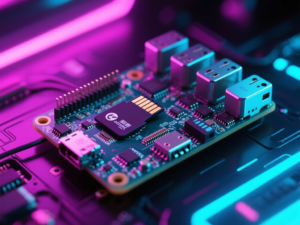
Raspberry Pi single-board computers are renowned for their low power consumption, compact size, and impressive capabilities. Among the many features that make the Raspberry Pi appealing, one stands out for its practicality: the use of microSD cards as boot devices.
Booting with MicroSD Cards
Unlike traditional computers that rely on hard drives or SSDs, Raspberry Pi utilizes microSD cards or USB drives for booting. The Raspberry Pi 5 expands this capability by allowing booting from NVMe drives with a special HAT. While using microSD cards has its drawbacks, such as limited wear endurance, high-endurance cards can mitigate these issues.
Ease of Operating System Changes
One of the most significant advantages of this booting method is the ease with which users can swap out microSD cards to change the operating system. This feature is particularly useful for those who use their Raspberry Pi for various tasks, such as retro gaming, web serving, or as a media center. Instead of reinstalling an operating system for each use case, users can simply change the microSD card.
Cost-Effective Storage Solutions
MicroSD cards are widely available and relatively inexpensive. For example, a 5-pack of 32GB microSD cards, rated UHS-1 and Class 10, can be purchased for around $35. This cost-effective solution allows users to maintain multiple operating systems, each tailored for specific applications, without the need for extensive hardware modifications.
Practical Applications
With the ability to easily switch microSD cards, a single Raspberry Pi can serve multiple purposes. Users can dedicate one card to Home Assistant, another to RetroPie, and a third for Kodi, while keeping a fourth for general use. This flexibility allows for experimentation without the risk of permanently altering a working setup.
The simplicity of changing microSD cards makes the Raspberry Pi an attractive option for users looking for a versatile computing solution. Whether for home automation or media streaming, the ability to quickly switch operating systems enhances the overall user experience.
This article was produced by NeonPulse.today using human and AI-assisted editorial processes, based on publicly available information. Content may be edited for clarity and style.
Original source: howtogeek.com