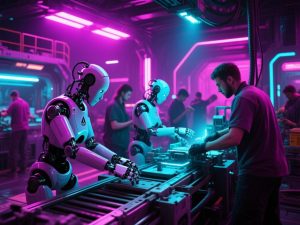
At the forefront of the automation conversation, the UC San Diego Robotics Institute is examining the interplay between robotics and human jobs. This exploration is critical as industries increasingly integrate automated systems into their operations.
The institute’s focus is not just on the technology itself but also on the societal implications that arise from its adoption. As robots take on more tasks, the question of how they will affect employment looms large. The research aims to understand which jobs are most at risk and how workers can adapt to this shifting landscape.
Research Goals and Methodologies
The Robotics Institute is employing a range of methodologies to address these questions. By analyzing current trends in automation, researchers are identifying patterns in job displacement and creation. They are also looking into how education and training programs can be tailored to prepare the future workforce for an increasingly automated world.
One of the key aspects of this research involves collaboration with various industries to gather data on how automation technologies are being implemented. This partnership allows for a real-world understanding of the challenges and opportunities that arise as robots and AI systems become more prevalent.
Impact on Different Sectors
Different sectors will experience varying degrees of impact from automation. For instance, jobs in sectors like manufacturing and transportation are more susceptible to automation due to the nature of the tasks involved. Conversely, roles that require creativity and emotional intelligence may see less disruption.
The institute is particularly interested in how these changes will affect not only employment rates but also the quality of work life for individuals. This includes considerations of job satisfaction and the potential for new roles that may emerge as a result of technological advancements.
Preparing for the Future
As the research progresses, the Robotics Institute emphasizes the importance of proactive measures. This includes advocating for policies that support worker transition into new roles and ensuring that educational institutions align their curricula with the skills needed in a more automated economy.
Ultimately, the goal is to create a roadmap that not only acknowledges the challenges posed by automation but also highlights the potential for innovation and growth in the job market. By understanding the future landscape of work, stakeholders can better prepare for the changes that lie ahead.
This article was produced by NeonPulse.today using human and AI-assisted editorial processes, based on publicly available information. Content may be edited for clarity and style.